

The Network of Nigeria Maritime Journalists (NNMJ) has expressed concern over delays in the onboarding of relevant government agencies into Nigeria’s National Single Window project, warning that the initiative must move beyond official announcements to effective implementation.
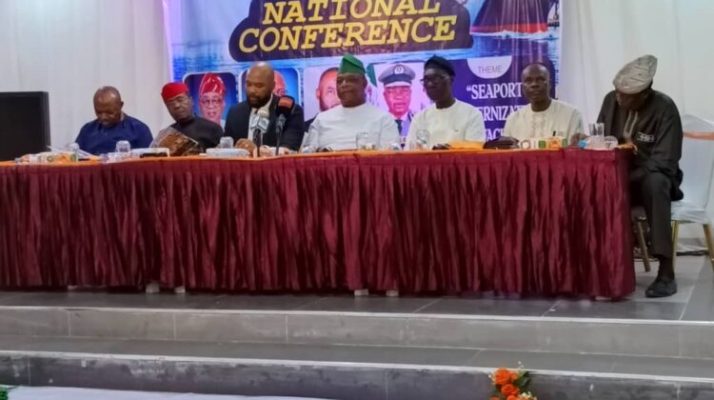
The organisation made its position known in a communiqué issued at the end of its 2026 National Conference held on Friday, November 13, at Airport Hotel, Ikeja, Lagos.
The conference, themed “Seaport Modernisation, Trade Facilitation and Revenue,” brought together key maritime industry stakeholders to examine the relationship between efficient port operations, trade facilitation, regulatory compliance and government revenue generation.
According to the communiqué, the National Single Window remains critical to achieving transparency, reducing unnecessary bureaucratic procedures, improving cargo clearance and strengthening government revenue.
The conference explained that the platform should provide a unified electronic system through which importers and exporters can submit regulatory documents and obtain approvals from relevant government agencies without unnecessary duplication.
However, participants expressed worry over delays in integrating the relevant regulatory institutions, stressing that the success of the initiative is dependent on on the willingness of government agencies to embrace a coordinated digital clearance system.
The conference specifically called for the full integration of the Nigeria Customs Service, Nigerian Ports Authority (NPA), National Agency for Food and Drug Administration and Control (NAFDAC), Standards Organisation of Nigeria (SON), Nigerian Maritime Administration and Safety Agency (NIMASA) and other relevant institutions within clearly defined timelines.
It also recommended that the implementation process should be monitored through measurable performance indicators to guarantee transparency, accountability and operational efficiency.
Beyond digitalisation, the conference warned against pursuing government revenue targets at the expense of legitimate trade and the overall competitiveness of Nigeria’s maritime sector, arguing that efficient trade facilitation, simplified clearance procedures, transparent regulatory processes and faster cargo movement would ultimately expand economic activities and improve government revenue.
The communiqué also raised concerns over the continued collection of container deposits by some shipping companies despite provisions of the Nigeria Insurance Industry Reform Act, 2025, which, as highlighted during the keynote presentation, prohibits such charges.
The conference lamented the gap between the enactment of legislation and its enforcement, urging regulatory authorities to ensure that shipping companies and other operators comply with applicable laws.
It further called for stronger regulatory oversight, particularly with the establishment of the Nigerian Ports Economic Regulatory Agency (NPERA), expressing the expectation that the agency would promote fair competition and address operational and commercial challenges within the port system.
Speaking during the technical session, former NIMASA Director-General, Barrister Temisan Omatseye, observed that disputes arising from container deposits largely involve private commercial transactions between freight forwarders and shipping companies.
He maintained that affected parties should formally challenge questionable charges, while expressing the expectation that NPERA would provide an appropriate regulatory framework for resolving such matters.
The conference also identified cargo diversion, excessive operational delays, freight payments to foreign interests and other inefficiencies as sources of economic losses to Nigeria.
It therefore called for improved revenue monitoring, transparency and accountability in port administration.
In addition, participants recommended stronger collaboration among the NPA, NIMASA, Nigeria Customs Service, NPERA, terminal operators, shipping companies and freight forwarders, noting that fragmented institutional responsibilities undermine efficiency and increase the cost of doing business.
Dr Emeka Akabogu, SAN, who delivered the keynote address highlighted the need for substantial improvements in Nigeria’s port infrastructure and operational capacity to support the country’s ambition of achieving a $1 trillion economy by 2030.
The conference was chaired by Omatseye, while other prominent participants included NPCC Chairman, Dr Bolaji Sunmola; NUJ Lagos State Council Chairman, Comrade Adewale Akodu; and representatives of WIMA Nigeria.
In its recommendations, NNMJ urged the Federal Government to provide the political will and institutional backing required to implement maritime reforms, insisting that digitalisation, regulatory compliance and trade facilitation must translate into tangible benefits for port users.
The organisation reaffirmed its commitment to constructive engagement and investigative journalism in promoting transparency, accountability and improved performance across Nigeria’s maritime industry.