
Question: Thank you. Once again, I want to appreciate you for the opportunity given to call us for this wonderful interview. I know that at the end of the day, we’ll get greater insight.
Answer: First of all, it’s always my pleasure. Thank you very much.
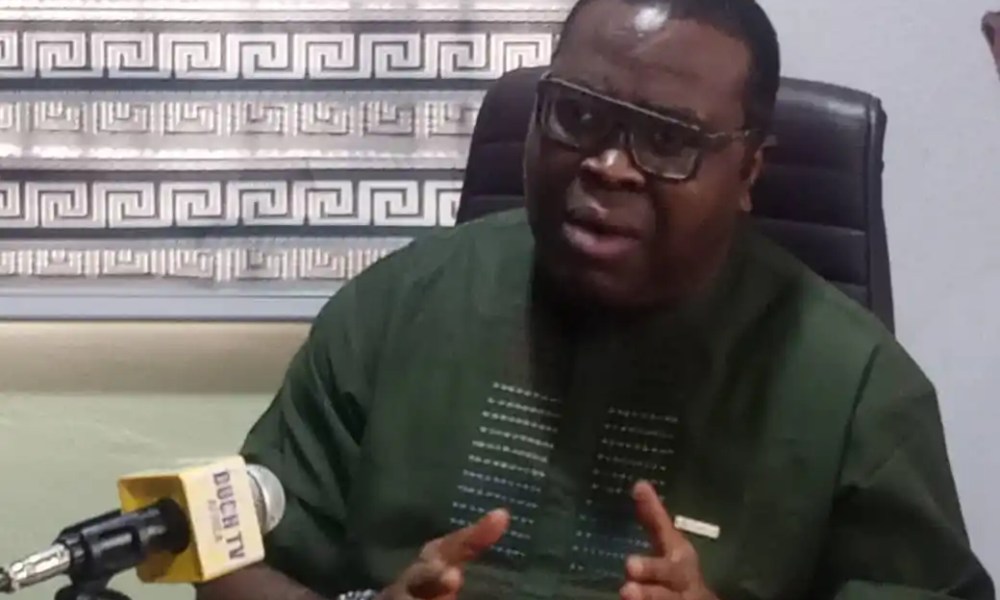
Question: So we want to know — who is Nze Jumbo, a.k.a. Bestman?
Answer: It’s not “a.k.a. Bestman.” My name actually is Bestman, okay? Bestman is Jumbo. Alright. If you say a.k.a. Irumolr, oh, that’s what they call me. But my real name is Bestman. I’m the President of Team Nigeria for Change, which is a politically active pressure group. I’m the publisher of Eko Mii Eko e, and the MD/CEO of Image Expressions Limited.
Question: What are the biggest security challenges facing Lagos State and how is the government working to address these issues?
Answer: Security challenge — well, if it’s in relation to Lagos particularly, I think it is the influx of people from every part of Africa. Because most times it’s easy to say “from every part of Nigeria,” but you’ll be amazed at the number of people coming into Lagos from Niger, from Chad, from Ghana, Togo, Benin. And because a whole lot of them are largely unchecked, they pose a lot of security threats — some that even pit us against one another.
There have been times people from all these West African countries will commit some infractions and we will say, “Ah, it’s the Fulani herdsmen,” whereas it’s not them — it’s not our brothers here. Sometimes people do things and disguise as if they are Igbos. Sometimes people do things, and somehow it has become a major challenge.
Thank God for the government which has put some measures in place to check that. I can also tell you that, by and large, security is much better in Lagos. I can’t remember the last time I heard that “area boys” collected a car. I can’t remember the last time I heard there was a bank robbery. Whether we like it or not, security has really improved in Lagos, and Lagosians are better for it.
Question: How can Lagos security be improved to protect citizens better and more effectively?
Answer: Well, let’s be factual and real. Lagos cannot protect other states. The number one job of Babajide Sanwo-Olu as Governor of Lagos State is the protection of life and property in Lagos.
Question: Now, by extension, how can the security of Lagos impact other states in Nigeria?
I’ve always recommended: just like Lagos partnered with Kebbi on rice production, Lagos is opening up a food process now whereby Lagos will collect the harvest from every state. Any farmer anywhere that has harvest can bring it to Lagos to buy. That’s collaboration.
So, in the area of security also, other states can come and say, “What are you doing in Lagos that we can copy?” And Lagos will be magnanimous enough to say, “Okay, we are doing this, we have put this in place, these are the things we are doing.” That’s the best way Lagos can help other states — especially those willing to learn.
Again, security cannot be the way we want it to be if there is still massive unemployment. For as long as the young ones don’t have jobs, are not empowered, and are not trained to be productive, they will be very good recruitment grounds for crime. While talking of the security architecture and processes, we should not forget unemployment and illiteracy. A population that is not enlightened will be ready prey for corruption in the form of terrorism, banditry, kidnapping, and other vices.
Question: So when it comes to community policing, aside from the structured security agencies that we have in the country, What role do you see Community Policing playing in enhancing security in Lagos, and how can it be implemented effectively?
Answer: , community policing has become something I don’t run away from. I might not support state police — that’s a personal opinion — because I’ve seen that most governors, when they are in power, support state police. The moment they leave power, they no longer support it. Why? Because they know what they can do with state police against whoever is identified as an enemy or opponent.
Community policing is something that could be very effective, especially in Lagos style. Lagos is doing something we call alternative security. It has employed alternative security — and that’s where people like us come in within the security architecture of Lagos State.
A lot of people who were previously regarded as useless — some call them “Illeya boys,” some even go as far as calling them hooligans — have all been put into teams, into cells, into groups. They secure their communities. They are the ones we relate to for information gathering. They are the ones that supply us with intelligence, which goes to the police and to the regular security agencies.
In different areas, these guys handle cases like road hijacking, where someone smashes your window while you’re in traffic. Now, they are the ones manning the roads in their areas, and that has drastically reduced such crimes. These are things we don’t make public, but I can tell you authoritatively that it is working. That’s why people like us are involved with Governor Babajide Sanwo-Olu in security matters.
Question: Away from security and community policing, we are here to talk about the promotion of inclusivity and diversity. What initiatives do you think Lagos State Government has implemented to promote inclusivity and diversity in government, and what impact have they made so far?
Answer: It depends on what you mean by inclusivity and diversity. In some contexts, inclusivity might mean injecting women into government. In others, it might mean bringing Igbos, Hausas, or other tribes into government. Inclusivity might also mean bringing members of other political parties into the APC-led government.
If you want me to take it in a broad view, I can tell you there is still no state in Nigeria that has the inclusivity of Lagos. Since Asiwaju Bola Ahmed Tinubu, go to Lagos public service — you will see directors who are from other states outside of Lagos, not just Yoruba states. Igbos, Hausas — people from other states have become directors in Lagos. Many have become commissioners.
Presently, the Deputy Chief of Staff to the Governor is from Delta. I work directly in a support capacity with the Governor and I’m not Yoruba. Mrs. Sanwo-Olu is doing so much in empowering women. Lagos is one place where you see PDP, ADC, Labour Party members cooperating with the APC government. They play what I call mature opposition — it’s not about destruction, because they’ve seen performance.
The inclusive nature of government in Lagos is something every other state in Nigeria should copy. Even by religion, we don’t know who is Muslim or Christian when it comes to governance. It’s an all-inclusive approach.
Question: And at the end of the day, are you saying there is also sustainability when it comes to gender inclusiveness?
Answer: Sustainability? Yes. I can’t predict the next government, but by insight — Fashola did it, Ambode did it, Sanwo-Olu is doing it — Lagos works on a template. Whoever comes after Sanwo-Olu will have to follow it. You just can’t change it. So, it’s sustainable.
Question: How do you think the government can foster greater unity among different ethnic and cultural groups in Lagos?
Answer: I hold a strong opinion on tribe and ethnicity. I am the Ochumba of Aguda Land, the Ochumba of Igbogbo, and Obasogun Town — yet I’m not Yoruba. I’m married to an Ijebu woman. All my life has been in Lagos. I’ve lived in South Africa, and now between the UK and Lagos. I’m from Bonny; my mother is from Owerri. Where will tribalism come from for me?
Tribalism and ethnic considerations are products of illiteracy and lack of exposure. Someone once asked me if Lagos is “no man’s land.” My answer: there is no land not owned by a people. The fact that a land prospers you does not mean it is not owned. Lagos’s success comes from collaboration and creating a platform where Igbos, Hausas, and others can succeed.
Question: Moving on — when it comes to land grabbing in Lagos, it seems like Lagos and land grabbing are five and six. How do you collaborate with other government agencies and security forces to prevent land grabbing?
Answer: Unfortunately, many see it as a Lagos problem, but it’s worse in other places like Abuja and parts of the East. Lagos has a land grabbing agency and is about to inaugurate a new one, where I’m supposed to head enforcement. Lagos has put measures in place so people don’t fall prey.
If you want to buy land, go to Alausa and check its status before paying. People fall victim because they chase cheap offers. You cannot eradicate crime 100%, but you can checkmate it. Lagos’s land grabbing agency has done a fantastic job, but citizens must also verify documents before buying.
Question: What’s your message to victims of land grabbers?
Answer: Go to court. Report to the Lagos State Anti-Land Grabbing Agency. They’ve recovered land for many victims, although you might not get your money back. The criminals may go to jail without funds to repay you. But Lagos is awake to the problem.
Question: It seems you have a robust portfolio. How do you combine your role as a publisher with your political involvement?
Answer: I’m not in Team Lagos now — I’m in Team Nigeria for Change. I used to be in Team Lagos years back. I’m versatile; sometimes I even act. I’m a publisher with enough staff to handle operations. I also run an advertising and marketing events company. My NGO activates my political interest — for example, on Sanwo-Olu’s 60th birthday, we visited 19 schools, donating exercise books and school bags.
I also support good governance across parties — I’ve worked in Abia with Governor Otti (Labour Party) and in Ogun State under Gbenga Daniel (PDP). I enjoy what I do; that’s how I cope.
Question: You seem to have worked in several states. Can you tell us about your time in Kogi?
Answer: At one point, I was almost the third most powerful person in Yahaya Bello’s government. I worked directly with him when he became governor to help stabilize Kogi’s streets and mobilise youths. I was in Kogi until he won his second term before leaving. I was also the APC Congress Chairman for Kogi State at one point