
The ECOWAS Bank for Investment and Development (EBID) has approved USD 266.7 million and XOF 30 billion to support a portfolio of strategic projects in Nigeria, The Gambia, Ghana, Senegal, and Côte d’Ivoire.
The approvals, granted at the 95th Session of the Board of Directors held on 30 March 2026, underscore the Bank’s continued commitment to advancing sustainable, inclusive, and resilient development in the region.
Opening the meeting, the President and Chairman of the Board of Directors of EBID, Dr. George Agyekum Donkor, underscored the transformative reach of these new commitments. “These interventions reflect our ambition to support Member States in structuring valuecreating projects that are fully aligned with the Sustainable Development Goals. By investing in infrastructure, agro-industry, environmental management, and industrial transformation, we are strengthening the foundations of a more resilient, inclusive, and integrated growth trajectory within West Africa,” Dr. Donkor stated.
The diversity of these projects underscores EBID’s capacity to catalyse high-impact regional initiatives and support the sustainable transformation of its Member States:
• Construction of waste management facilities in Lagos, Nigeria (USD 50 million): Implemented under a public-private partnership (PPP), this project will expand Lagos’s waste management infrastructure, increase the recycling rate to 45%, create over 5,000 jobs, produce 60,000 tons of organic compost annually, and reduce public health risks.
• Credit line to BNDE, Senegal (XOF 20 billion): This facility will enhance BNDE’s capacity to finance small and medium-sized enterprises (SMEs) and industries, support agricultural value chains, improve access to housing, and promote sustainable employment, particularly for women and youth.
• Construction of a tissue paper manufacturing plant in Ghana (USD 15 million): This project involves establishing a 65-ton-per-day production facility to manufacture jumbo tissue rolls locally, reduce dependence on imports, and support industrialisation.
• Expansion of G Farms Ltd.’s operations in The Gambia (USD 10.04 million): This investment will increase poultry and dairy production capacity, strengthen food security, and reduce reliance on imported animal products.
• Transport infrastructure development in Bauchi State, Nigeria (USD 91.63 million): Aligned with the National Development Plan, this programme will modernise road infrastructure, reduce logistics costs, improve access to essential services, open up agricultural zones, and incorporate climate-resilient construction techniques.
• Construction of the Lagos–Calabar Coastal Highway, Nigeria (USD 100 million): This strategic corridor, spanning nine coastal states, will enhance national and regional connectivity, ease congestion, improve logistics efficiency, and stimulate regional trade.
• Credit line to Afriland First Bank Côte d’Ivoire (XOF 10 billion): This facility is designed to support the financing of MSMEs and SMEs, strengthen the bank’s capacity
to fund the real sector, promote productive investments, and foster job creation and inclusive growth.
Together, these projects reflect EBID’s commitment to strengthening the foundations of long term economic development across the ECOWAS region, enhancing competitiveness and resilience while advancing sustainable and inclusive growth
About EBID
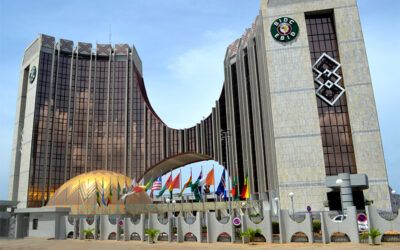
ECOWAS Bank for Investment and Development (EBID) is the Development Finance Institution of the Economic Community of West African States (ECOWAS). Based in Lomé, Togolese Republic, the Bank is committed to financing developmental projects and programmes covering diverse initiatives from infrastructure and basic amenities, rural development and environment, industry, and social services sectors, through its private and public sector windows. EBID intervenes through long, medium, and short-term loans, equity participation, lines of credit, refinancing, financial engineering operations, and related services.