

The executive vice chairman and chief executive officer of the Nigerian Communications Commission (NCC), Dr. Aminu Maida, has identified market expansion, improved productivity, and innovation enablement as the critical pathways through which broadband connectivity will drive Nigeria’s ambitious $1 trillion economy target by 2030.
Speaking at a two-day conference of the Financial and Business Online Publishers (FiBOP) held in Lagos at the weekend, Maida outlined how digital connectivity serves as the common platform for scaling all sectors of the economy.
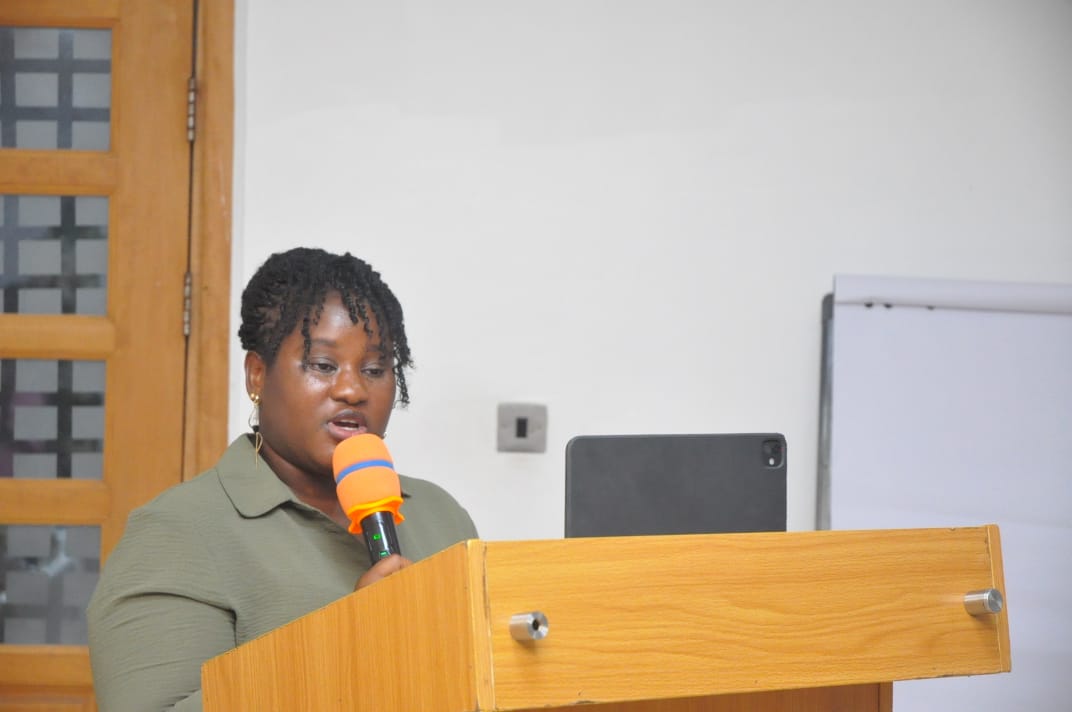
According to the NCC boss, who was represented by the senior manager, regulatory services, Mrs Yetunde Adeyemo, a trader in Lagos, a farmer in Nasarawa, a fashion designer in Aba, a content creator in Kano, or a software developer in Kaduna can use connectivity to reach customers, receive payments, advertise products, manage logistics, and access wider value chains.
“Without broadband, many businesses remain local. With broadband, they can become national, regional, and global,” he said.
Maida explained that broadband drives improved productivity by reducing transaction costs, shortening service delivery time, improving inventory management, supporting remote work, enabling digital records, and making business processes more efficient—particularly for micro, small, and medium enterprises that remain central to Nigeria’s employment and enterprise ecosystem.
He also emphasised that the digital economy thrives where developers, startups, researchers, creators, and entrepreneurs have affordable and reliable access to data.
From fintech and edtech to agritech, healthtech, and creative technology, he noted that innovation requires connectivity, with communications infrastructure—including fibre networks, towers, satellites, and spectrum resources—providing the backbone for transmitting data, voice, and video across distances.
Beyond economic growth, Maida highlighted broad band’s role in enhancing digital inclusion and strengthening public service delivery.
He stressed that economic growth excluding large sections of the population cannot deliver sustainable national prosperity, noting that broadband can address socio-economic challenges through job creation, digital literacy, financial inclusion, education, identity management, and improved quality of life.
“Digital government services depend on connectivity. Education platforms, emergency communications, health systems, identity services, security coordination, public records, and regulatory services are all improved when citizens, institutions, and communities are connected,” he stated.
The NCC chief called for deliberate action on digital inclusion, noting that market forces alone will not connect every community or empower every citizen.
He cited the Commission’s Digital Awareness Programme, which equips secondary schools with ICT resources and internet connectivity, as an example of targeted intervention. Since its inception in 2006, more than 300 schools across Nigeria’s six geopolitical zones have benefited from the programme.
“The journey to a trillion-dollar economy begins with people, especially young people. If Nigeria’s youth are digitally skilled, digitally connected, and digitally confident, they will become creators of value rather than mere consumers of technology,” Maida said.
Despite the prospects, Maida acknowledged that broadband expansion continues to face obstacles including high Right-of-Way charges, infrastructure vandalism, fibre cuts, multiple taxation, high deployment costs, power supply constraints, and uneven rural coverage. These challenges, he noted, increase the cost of service delivery and slow expansion into underserved and unserved areas.
He called for sustained engagements around harmonized Right-of-Way processes, one-stop approval systems, dig-once policies, protection of telecoms infrastructure, standardized deployment processes, and improved collaboration with state governments.
“Telecommunications infrastructure is critical national infrastructure. Networks are no longer optional facilities. They are the roads, bridges, and power lines of the digital age. Damage to fibre infrastructure does not affect operators alone; it affects banks, hospitals, schools, businesses, security communications, online publishers, government services, and ordinary citizens,” he warned.
Maida urged all stakeholders—government at all levels, operators, infrastructure companies, content providers, the media, and citizens—to collaborate in creating an enabling environment for deployment, investing in coverage and quality, deepening fibre reach, producing relevant local services, and protecting telecom infrastructure as a shared national asset.
Addressing online publishers and financial/business journalists directly, he said: “You shape narratives, interpret data, explain policy, and help the public understand the link between connectivity and prosperity. In an economy increasingly driven by information, credible publishing is itself a form of infrastructure.”
Looking towards the $1 trillion economy ambition, Maida outlined practical priorities including deepening broadband penetration to reach underserved communities, improving Quality of Experience so connectivity is reliable, accelerating migration from legacy networks to higher-capacity technologies, protecting infrastructure, reducing deployment costs, promoting digital literacy, and strengthening consumer protection, cybersecurity awareness, transparency, and trust in the digital ecosystem.
He assured that the Commission will continue to promote competition, protect consumers, encourage investment, support innovation, and strengthen the resilience of Nigeria’s communications sector, with evidence-based regulation, strategic stakeholder collaboration, and market development remaining central to its mandate.
“The pathway to a $1 trillion economy will be built on many pillars: agriculture, manufacturing, energy, trade, services, finance, creativity, and technology. But digital connectivity will be the common platform that enables all these sectors to scale.
“When we invest in broadband, we are not investing in cables, towers, and spectrum alone. We are investing in productivity. We are investing in jobs. We are investing in education. We are investing in entrepreneurship. We are investing in inclusion. Above all, we are investing in Nigeria’s future,” Maida added.